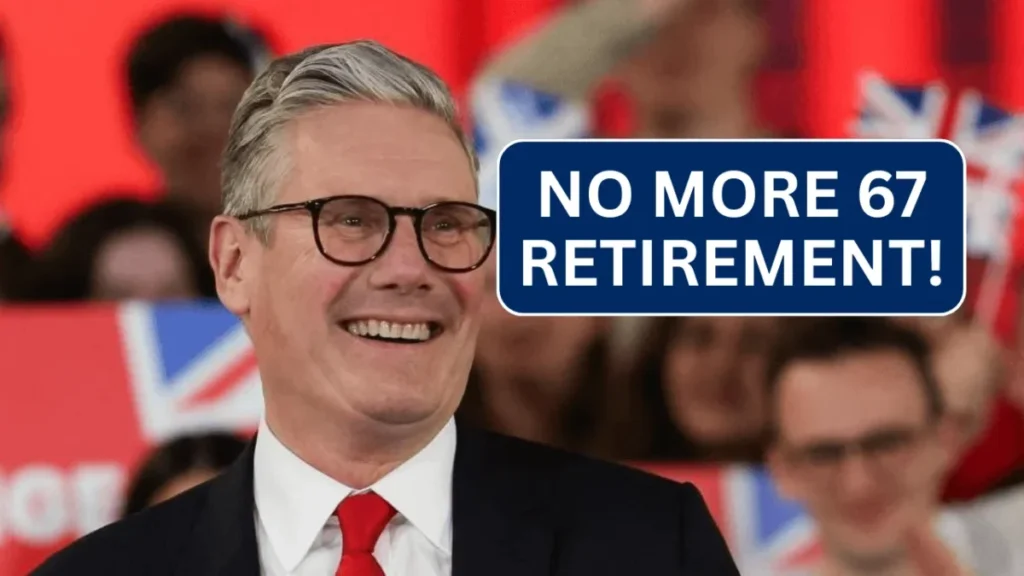
For decades, the age of 65 was the golden number etched into the minds of workers across the United Kingdom. It was the finish line—the moment when the daily commute ended and the era of gardening, travel, and grand-parenting began. Then, that line moved to 66, and soon it will sit at 67. But the latest signals from Westminster suggest that even 67 is becoming a thing of the past. The government’s confirmation regarding the trajectory of the State Pension age is sending ripples through offices, construction sites, and NHS wards across the country.
This isn’t just a policy tweak; it’s a fundamental shift in the British social contract. As life expectancy—despite some recent plateaus—remains significantly higher than it was when the pension system was designed, the Treasury is looking at the books and realizing the math simply doesn’t add up anymore. For the average UK worker, “retirement” is no longer a fixed destination, but a moving target that requires more agility and planning than ever before.
Why the goalposts are moving
The primary driver behind the shift is fiscal sustainability. The UK’s State Pension operates on a “pay-as-you-go” basis. Current workers pay National Insurance, which immediately goes out the door to pay current pensioners. As the “Baby Boomer” generation enters retirement in record numbers, and the birth rate remains relatively low, the ratio of workers to retirees is shrinking.
To keep the system from collapsing under its own weight, the government has two main levers: raise taxes or raise the age. Politically, raising the age is often seen as the “long-term” solution, even if it feels like a heavy blow to those currently in their 40s and 50s. The confirmation of these new timelines is a clear signal that the state can no longer afford to support a third of a person’s life through public funds alone.
The accelerated timeline to 68
Current legislation already has the move to 67 scheduled between 2026 and 2028. However, the real “sting” in the tail comes from the discussions regarding the jump to 68. Previously, this was slated for the mid-2040s. Now, independent reviews and government briefings suggest this could be brought forward to the late 2030s.
For a worker born in the 1970s, this is a game-changer. It means that just as they were preparing for the final decade of their career, the finish line has been pushed back another year. It sounds like a small change, but in terms of physical health, mental fatigue, and financial requirements, twelve extra months of full-time work is a significant hurdle.
Impact on manual and frontline workers
While an office worker might find the transition to 68 manageable, the story is very different for those in physically demanding roles. Construction workers, nurses, police officers, and factory staff often find that by their early 60s, their bodies are signaling that it’s time to slow down.
The government’s “one-size-fits-all” approach to the pension age fails to account for the disparity in healthy life expectancy. Someone living in an affluent part of the South East might expect to remain healthy well into their 80s, whereas someone in a post-industrial town in the North might face chronic health issues by 62. For the latter group, raising the pension age to 68 isn’t just a delay—it’s an impossibility.
The end of the traditional retirement
We are witnessing the death of the “cliff-edge” retirement. The idea that you work 40 hours a week until a specific birthday and then never work again is fading. Instead, the UK is moving toward a “phased” model. This is partly due to the rising pension age and partly due to the cost-of-living crisis.
Many people in their late 60s are now “un-retiring” or taking on part-time “bridge jobs.” These roles provide the extra income needed to survive until the State Pension finally kicks in. This shift requires employers to be more flexible, but it also requires workers to maintain their skills and digital literacy much longer than their parents did.
Gender inequality in the new system
The rising pension age often hits women harder. Historically, women have smaller private pension pots due to time taken off for childcare or caring for elderly parents. They are also more likely to work in lower-paid, part-time sectors.
When the State Pension age rises, women who rely on it as their primary source of income find themselves in a precarious position. We saw the legal and social battles fought by the WASPI (Women Against State Pension Inequality) generation. The current changes risk creating a new generation of women who face “pension poverty” because they simply haven’t had the same number of years to accumulate private wealth as their male counterparts.
The role of the triple lock
The “Triple Lock” is the mechanism that ensures the State Pension increases each year by whichever is highest: earnings growth, inflation, or 2.5%. While this protects the value of the pension, it also makes it incredibly expensive for the taxpayer during times of high inflation.
There is an ongoing debate about whether the Triple Lock can survive alongside a rising pension age. Some argue that if we want to keep the Triple Lock, we must accept working longer. Others argue that the Triple Lock is the only thing keeping millions of British pensioners out of poverty. The confirmation of a new pension age suggests the government is trying to keep the Triple Lock intact for now, but at the cost of our leisure time in old age.
Preparing for the pension gap
The “pension gap” is the period between when you want to retire and when the government starts paying you. If you want to retire at 65 but the state won’t pay until 68, you need three years of independent funding.
For many, this will come from a Workplace Pension. Since the introduction of Auto-Enrolment in 2012, millions more people are saving. However, many are only contributing the minimum 8%. Experts warn that this won’t be enough to bridge a three-year gap. The “Good-bye to 67” announcement should be a wake-up call for everyone to check their contribution levels and see if they can afford to tuck away even an extra 1% or 2% each month.
Rethinking the 50s career pivot
If we are working until 68 or 70, the “mid-life crisis” needs to be replaced by the “mid-life pivot.” Instead of winding down in your 50s, this decade is becoming a time for retraining. The government has floated the idea of “skills bootcamps” for older workers.
Staying employable is the best insurance policy against a rising pension age. Whether it’s learning new software, moving into consultancy, or starting a small business, the ability to generate income in your late 60s provides a level of autonomy that relying on the State Pension simply cannot offer.
Property and the retirement puzzle
For previous generations, a paid-off mortgage was the ticket to a comfortable retirement. Today, the housing market makes that dream harder to achieve. With people taking out 35-year mortgages in their 30s, many will still be paying for their homes well into their 60s.
When the state confirms a later pension age, it puts additional pressure on those who are still paying rent or mortgage interest. We may see a rise in multi-generational living, where adult children and their “working-retired” parents share costs to cope with the lack of a state safety net until age 68.
The health factor and the NHS
A workforce that stays on the job until 68 is a workforce that will place more demand on the NHS. Occupational health will become a massive priority for UK businesses. If the government wants people to work longer, it must invest in preventative healthcare to ensure they are physically capable of doing so.
There is also the mental health aspect. Working into your late 60s can provide social connection and purpose, but for many, it is a source of stress and exhaustion. A successful transition to a higher pension age requires a society that values “wellness” as much as “productivity.”
How to check your status
In light of these confirmations, every UK resident should take five minutes to visit the “Check your State Pension forecast” page on the GOV.UK website. This tool tells you exactly when you can retire based on your birth date and how much National Insurance you have contributed.
Knowledge is power. If you realize your retirement age is 68, you can start making small adjustments now—perhaps by increasing your pension contributions, paying off high-interest debt, or looking into a Lifetime ISA (LISA) if you are under 40.
The global context of retirement
It’s worth noting that the UK isn’t alone. From France to Japan, aging populations are forcing governments to make unpopular decisions about retirement. In France, similar changes led to widespread protests. In the UK, the reaction has been more of a quiet, resigned frustration.
However, the UK’s system is unique in its complexity. By understanding that the State Pension is no longer a “guarantee of rest” but a “supplement for later life,” we can better navigate the years ahead.
Embracing the new reality
The goodbye to retiring at 67 is a tough pill to swallow. It feels like the goalposts are being moved just as we get close to them. However, by accepting this reality early, we can take back control.
Retirement doesn’t have to be a date set by a politician in London. It can be a state of mind and a financial position that you build for yourself. The State Pension should be the “bonus,” while your private savings, your health, and your adaptable skills become your primary “retirement fund.”
The road to retirement is getting longer, but it doesn’t have to be more difficult if you start preparing for the extra miles today.